Think Before You Stitch: Cultivating Patience Through Craft
Part 1 of the Crafting the Mind SeriesA Behavioral Science Approach to Creativity and Executive FunctionThe Moment Before the Stitch
You’ve got the yarn in hand, the pattern open, and the excitement bubbling up… but then a pause. That single moment of hesitation before diving in is more powerful than it seems.
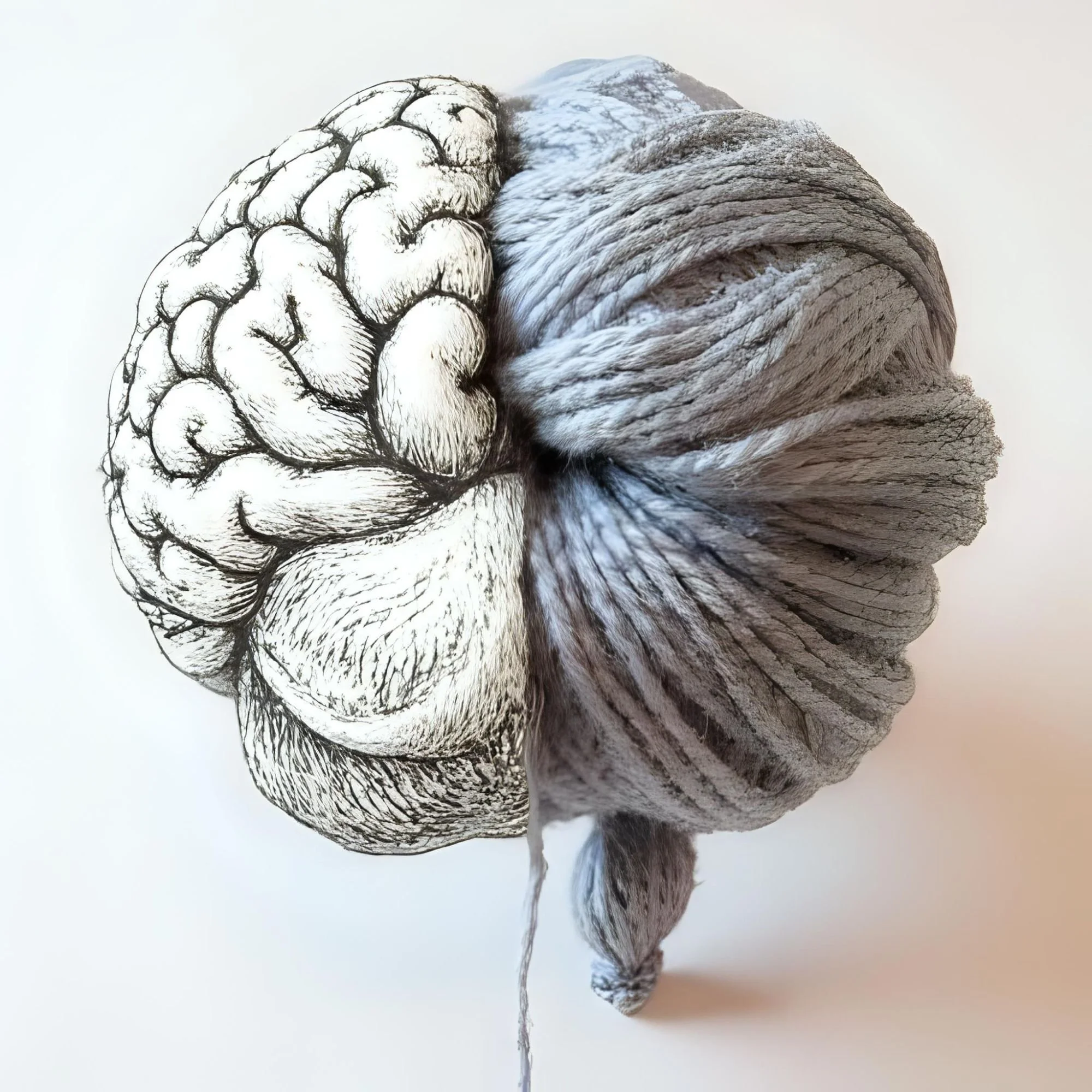
We often think of creativity as free-flowing. The spontaneous spark that drives us to make, create, and explore. But in reality, one of the most crucial parts of creativity is the pause. The ability to stop, think, and choose our next action intentionally.
In behavioral science, this skill is called response inhibition, and it’s one of the core executive functions that help us stay regulated, mindful, and productive, both in life and in craft.
What Is Response Inhibition?
Response inhibition is the ability to think before acting. It helps us resist the urge to react impulsively and instead take time to evaluate what’s happening.
In everyday life, it’s what allows us to pause before speaking out of frustration, resist scrolling when we should be working, or stop ourselves from casting on just one more project before finishing the current one (we’ve all been there).
When this skill is strong: You can stay calm, follow directions, and act intentionally.
When this skill is weak: You may react emotionally, start too many things at once, or rush through steps, leading to mistakes, stress, or unfinished projects.
The Knitting Analogy: Impulses in Motion
Knitting (and other crafts) give us a living metaphor for response inhibition. Each stitch requires a balance between action and awareness — the tension on the yarn, the rhythm of the pattern, the patience of progress.
When we rush:
We twist stitches
Drop a loop
Skip a row
Or realize ten rows later that something went wrong
Learning to pause before pulling the yarn through, double checking a pattern, or taking a mindful breath before tackling a tricky section. These are all micro-exercises in strengthening response inhibition.
The ABA Lens: Training the Pause
Applied Behavior Analysis (ABA) gives us practical tools to strengthen this skill. Response inhibition isn’t innate. It is learned and shaped through reinforcement and practice.
ABA principles & how it applies to crafting:
Antecedent Control
Prepare your environment for calm focus. Reduce distractions and set up all your materials before you begin.
Shaping
Reinforce small improvements. Even one intentional pause is progress.
Self-Monitoring
Track how often you “pause before acting.” Over time, awareness becomes habit.
Reinforcement
Reward yourself for progress. For example, finishing a row with accuracy or simply enjoying the process without rushing.
Each of these builds patience systematically, not as an abstract virtue, but as a learned behavioral strength.

Behavioral Craft Strategies
The Three-Second Rule Before starting a new section, pause for three seconds. Ask: “Do I know what comes next?” This short delay builds mindfulness and accuracy.
Mindful Frogging When you have to rip out stitches, treat it as a mindfulness exercise. Focus on the movement, the rhythm, and the lesson — reframing frustration as awareness.
Pattern Previewing Read an entire section before knitting it. This reduces impulsive mistakes and increases understanding — like behaviorally “rehearsing” before acting.
Environmental Cues Place a subtle reminder in your workspace, (a tag that says pause or a charm marker), as a discriminative stimulus to check in before moving forward.
Reinforcement in Practice
At the end of your crafting session, write down one moment where you paused intentionally. Even a brief note strengthens your awareness and makes self-control observable. Over time, these moments accumulate into a powerful habit of patience that extends far beyond your crafting space.
Reflective Prompt
When do you notice yourself rushing? Whether it is in your craft or your daily life? How might slowing down, even for a few seconds, change the outcome?
If this post supported your craft or your wellbeing, you’re welcome to ‘buy me a coffee.’ Never expected-always appreciated.