Cognitive Flexibility: Adapting Your Creative Flow
A biweekly Ewedaimonia series on strengthening executive function through creativity.
The Beauty of the Unexpected
You are halfway through a creative project when something changes. The yarn from the “same” dyelot isn’t matching the previous skein. A ceramic glaze dries differently than expected. A color combination that looked perfect in your sketch suddenly feels off.
Instead of frustration, you pause, reassess, and adjust. You find a new way forward. That moment of recalibration is cognitive flexibility in action, the ability to shift perspective, adapt strategies, and respond to change while keeping your original goal in mind.
In creative practice, this flexibility is often where the most meaningful growth happens.
Understanding Cognitive Flexibility

Cognitive flexibility is an essential executive function skill that allows the brain to adapt when circumstances change. It supports problem solving, innovation, emotional regulation, and resilience.
At its core, cognitive flexibility allows us to:
Adjust to new rules or changing task demands
Approach challenges from multiple perspectives
Integrate feedback or new information
Shift between logical and imaginative thinking
Research in behavioral neuroscience links cognitive flexibility to the prefrontal cortex and anterior cingulate cortex, brain regions involved in learning, error detection, and emotional control. These regions thrive on novelty and challenge, both of which are naturally present in creative activities.
Creativity as Flexibility Training
Creative work offers continual opportunities to practice cognitive flexibility. Whether you are knitting, painting, sewing, or sculpting, each project requires a balance between intention and adaptation.
Knitting builds flexibility when a pattern requires modification. Painting strengthens it as color, composition, or layering evolves during the process. Sewing and crafting rely on adaptability when materials behave unpredictably or measurements shift.
Each time you revise a plan and move forward creatively, you strengthen neural pathways associated with flexible thinking and emotional regulation. These moments act as small cognitive stretches that teach the brain to release rigidity and remain open to possibility.
The Science of Adaptation
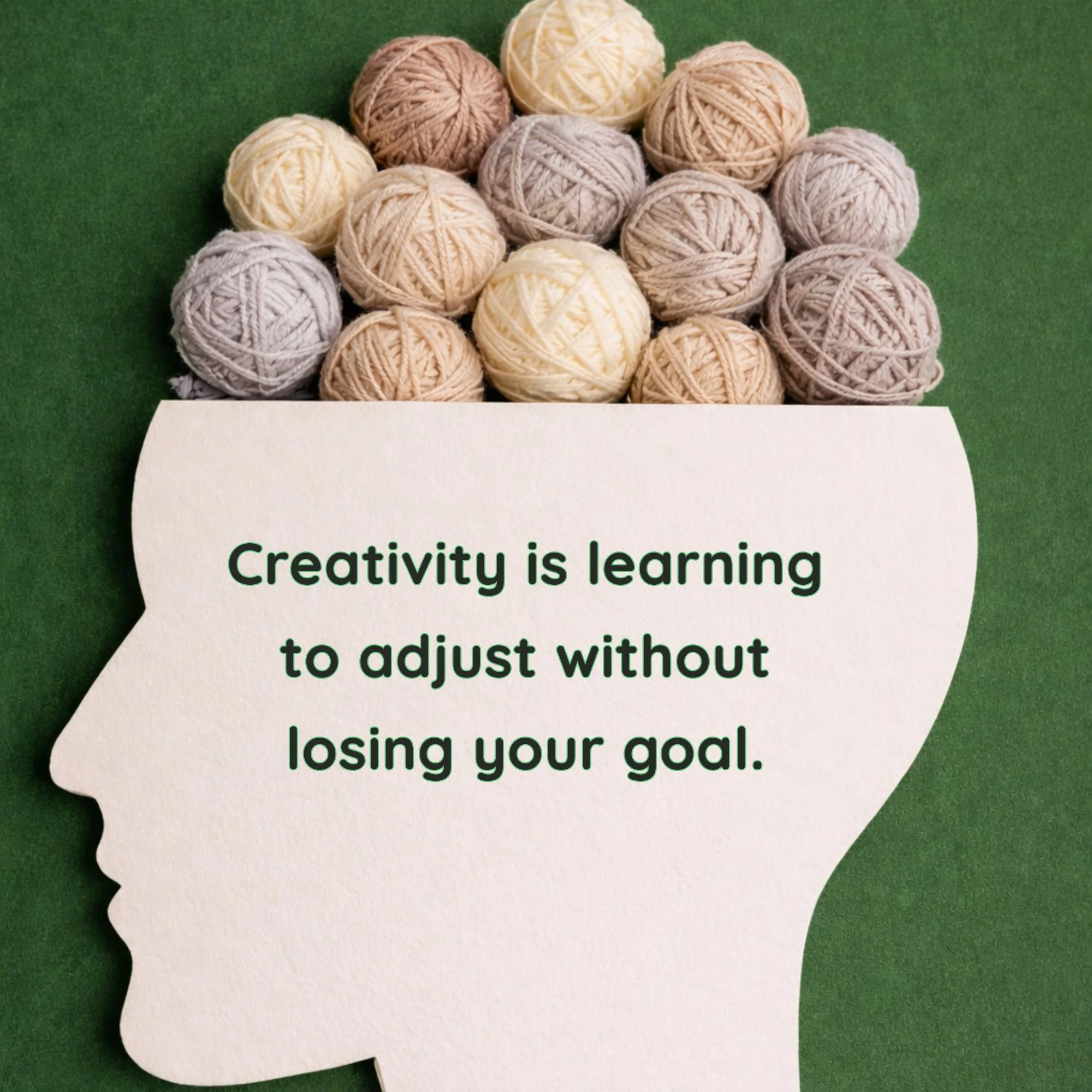
Studies show that higher cognitive flexibility is associated with improved emotional well being and long term stress resilience. Individuals who can adapt their thinking are better equipped to navigate uncertainty and recover from setbacks.
In behavior analysis, this process resembles shaping, the gradual refinement of behavior through successive adjustments. In creative practice, shaping often happens intuitively. Each response to an unexpected outcome reinforces psychological flexibility, an important contributor to mental health and goal attainment.
Embracing Imperfection
Cognitive flexibility also encourages a gentler relationship with creativity. When perfection is no longer the only acceptable outcome, exploration becomes possible. Mistakes turn into discoveries, and detours become part of the final design.
Creative practice mirrors life in this way. Both are imperfect, evolving, and filled with opportunities to begin again with greater insight. A broken thread or uneven stitch is not a failure. It is an invitation to adapt.
A Reflection to Craft
Consider a recent creative moment that did not unfold as planned. How did you adjust? Did a new technique, material choice, or mindset improve the outcome?
That moment reflects cognitive flexibility at work. Each creative challenge approached with curiosity strengthens both your craft and your mind.
🌿 Stay Connected
Follow Executive Functioning Through Creativity, a biweekly Ewedaimonia series exploring how creative practice supports cognitive skills, emotional regulation, and personal growth.
Next: Planning and Organization, From Skein to Strategy